Blog
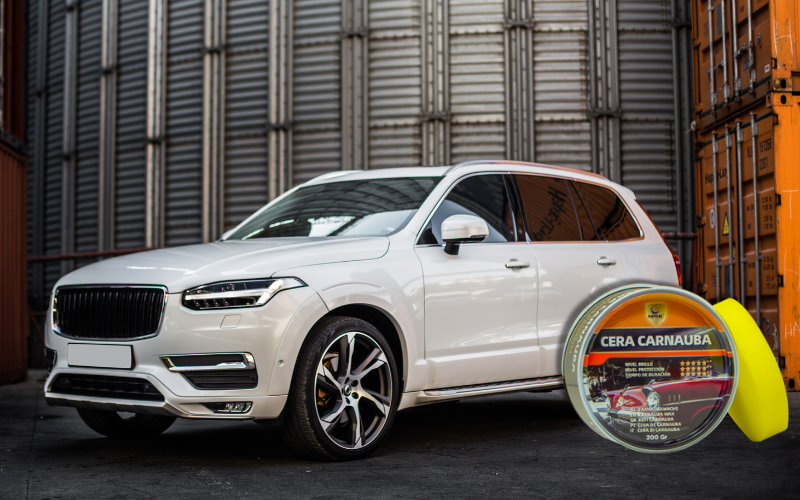
If you're a car enthusiast, you know there's nothing like seeing your vehicle gleam in the sun with a flawless finish. That feeling of pride when admiring the gleaming bodywork isn't accidental: it's the result of meticulous care and quality products. Among the best-kept secrets of detailing, the SPSIL Carnauba Wax It occupies a privileged place.
Used by automotive professionals and enthusiasts, this natural wax of Brazilian origin is renowned for offering a Deep shine, mirror effect and long-lasting protection against the elements. But it's not just about aesthetics, it's about preserving the paint and keeping the car looking new for longer.
In this article you will discover what carnauba wax is, why it has become a favorite among motor enthusiasts, and how to apply it step by step to achieve spectacular, show-worthy results.
What is carnauba wax?
The Carnauba wax It is a natural vegetable wax obtained from the leaves of the palm Copernicia prunifera, a species native to northeastern Brazil. Also known as the "queen of waxes," it is widely valued for its intense shine, high hardness and resistance to water and heatIts use has spread over time across multiple industries due to its unique properties.
This type of wax is harvested using traditional methods: the palm leaves are sun-dried and then scraped to extract a waxy powder, which is subsequently refined to obtain pure wax. The result is a completely natural product. natural, biodegradable and non-toxicThis makes it very attractive to consumers looking for sustainable options.
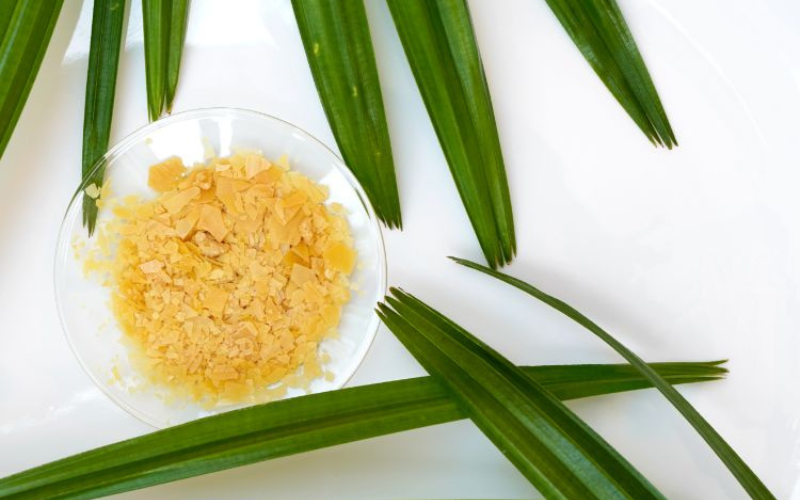
One of the most outstanding characteristics of carnauba wax is its high melting point (around 80-85 °C), making it an ideal choice for products that need to maintain their shape and properties in hot conditions, such as car waxes, cosmetics, or food coatings.
In the automotive industry, for example, carnauba wax is used to protect and give shine to car paint. It creates a protective layer that It repels water, reduces surface scratches, and improves the visual finish. of the vehicle. In cosmetics, it is used in products such as lipsticks, creams and mascaras, thanks to its ability to give consistency and shine without altering the skin.
In addition, it is also used in the food industry as a natural coating for fruits, sweets and medicines, prolonging their preservation and giving them an attractive finish.
In summary, carnauba wax is an ingredient versatile, eco-friendly and highly functional, present in more products than we imagine in our daily lives.
Benefits of carnauba wax in automotive products
The Carnauba wax It is one of the most highly regarded products in the world of car care. Its natural origin, combined with its exceptional protective and aesthetic properties, makes it an ideal choice for improve the appearance and protect the paintwork of vehicles.
One of its main benefits is the deep, warm glow which it provides. Unlike synthetic waxes, carnauba wax offers a more natural and attractive finish, especially on dark-colored vehicles, where it highlights the depth and contrast of the paint.
In addition to its aesthetic function, this wax acts as a Protective barrier against external agentsThanks to its water and heat resistance, it repels moisture, protects against ultraviolet (UV) rays, and reduces the adhesion of contaminants such as dust, tree sap, bird droppings, and insect remains. It also helps to prevent micro-scratches and marks from frequent washing.
Carnauba wax is also ideal for maintaining vehicle paintwork cleaner for longerIts ability to seal the surface creates a "self-cleaning" effect by making it difficult for dirt particles to adhere to the car body.
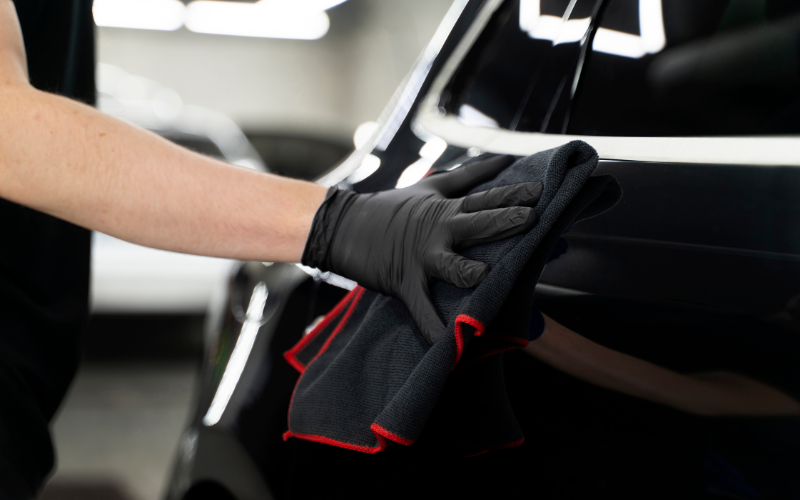
Another advantage is that it can be applied both manually and with a polisher, allowing its use to be adapted to all types of users, from detailing enthusiasts to professional workshops.
Although its durability is slightly less than that of some synthetic waxes (around 6 to 8 weeks), many prefer it for its superior finish and its natural composition, free of petroleum derivatives.
In short, applying carnauba wax to a car not only improves its appearance, but also extends the life of the paintIt protects against the elements and facilitates daily maintenance.
Differences between carnauba wax and other waxes
When it comes to car care, there are many types of waxes on the market, but not all of them offer the same results. Main differences between carnauba wax and other waxes —such as synthetic ones (polymers) or hybrid waxes— are based on their origin, finish, durability and level of protection.
The Carnauba wax is of origin natural, extracted from the leaves of the palm Copernicia pruniferaand is known for offering a warm and deep glowThis finish is especially appreciated on dark or showroom vehicles. It is difficult to match with synthetic products.
- In contrast, the synthetic waxes, also called polymeric sealants or waxesThey are formulated in the laboratory to offer a greater durabilityThese can protect the car's paint for several months (up to 4-6 months), while carnauba wax usually lasts between 6 and 8 weeksDepending on usage conditions and weather.
- Another important difference is the heat and water resistanceWhile carnauba wax can withstand high temperatures (up to 85°C), some synthetic waxes have even greater resistance and may be more suitable in extreme conditions or very humid climates.
- The hybrid waxesOn the other hand, they combine carnauba wax with synthetic polymers, seeking the best of both worlds: the shine of carnauba and the durability of synthetics. However, in practice, they often sacrifice some of the visual appeal achieved by pure natural wax.
- Regarding the applicationCarnauba wax requires a little more dedication and polishing to achieve its maximum effect, while synthetic waxes are usually easier and quicker to apply.
In summary, the choice depends on the user: Carnauba wax is ideal for those who value shine and a premium finishwhile synthetic waxes excel in durability and ease of use.
How to apply carnauba wax to different surfaces
This video shows it clearly and simply. How to apply carnauba wax correctly to achieve a mirror-like finish on your carIt is ideal for both amateurs and those seeking a professional result without complications.
The application begins with the vehicle clean and dryan essential condition to ensure proper wax adhesion. Then, with the help of a sponge or soft applicatorA small amount of carnauba wax is taken and applied in circular motions to the car's paint.
One of the highlights of the video is that The wax spreads easilycovering the surface evenly without leaving heavy residue or a sticky feeling. After letting it act for a few minutes, proceed to polished with a microfiber clothrevealing a deep shine and a reflective finishworthy of display.
This type of wax not only improves the vehicle's appearance, but also... Protects from moisture, UV rays and dirtextending the life of the paint. Furthermore, the product requires minimal effort and no specialized machinery, making it perfect for home use.
The result, as can be clearly seen at the end of the video, is awesomea shiny, smooth surface with that the much sought-after mirror effect for detailing enthusiasts.
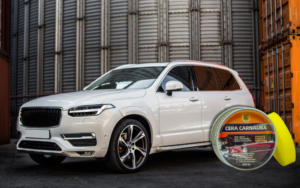
Carnauba wax: What it is, what it's used for, and how to apply it to your car
If you're a car lover, you know there's nothing like seeing your vehicle shine in the sun with